
Eastwood Marathon #15: Is The Rookie Just a Lethal Weapon Copycat?

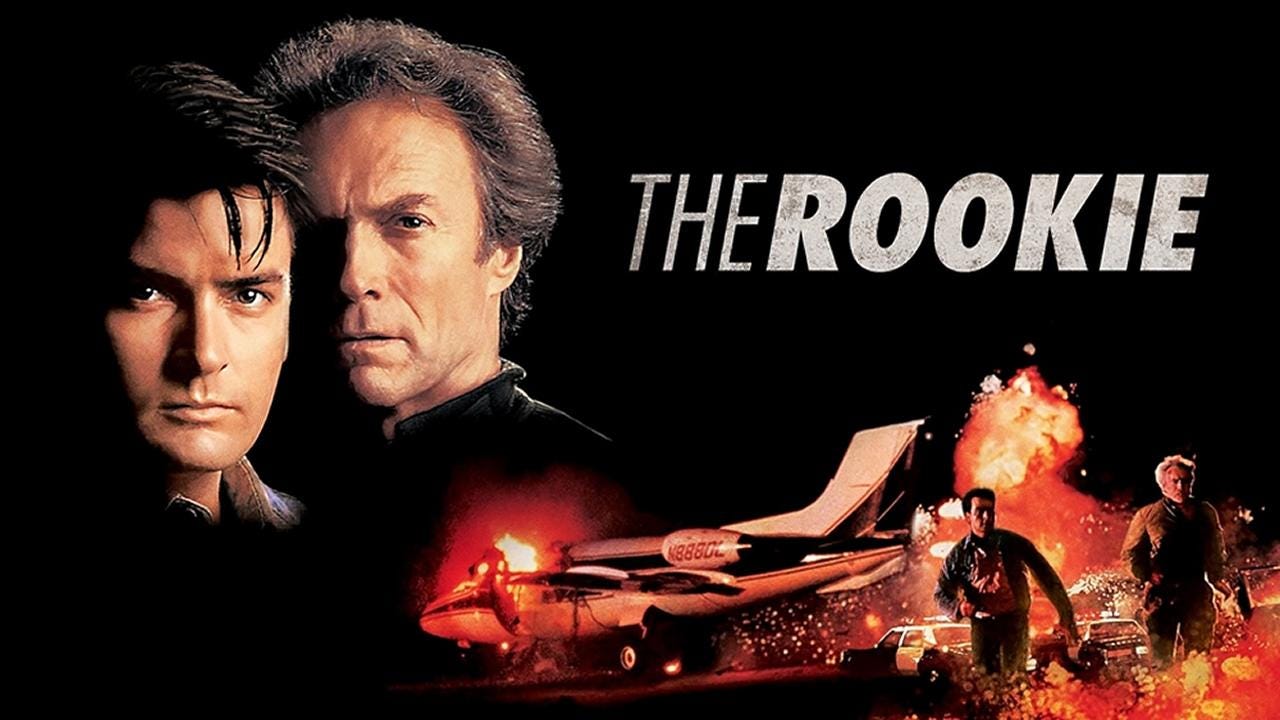
The Rookie is a 1990 buddy cop action thriller directed by Clint Eastwood (who also stars as Nick Pulovski), written by Boaz Yakin and Scott Spiegel, and starring Charlie Sheen as David Ackerman and Raúl Juliá as Strom. The plot focuses on a crusty, zero-chill veteran cop whose partner is whacked by a slick German car-theft kingpin. He gets paired up with a rich, green rookie who is still traumatized by a childhood accident. Naturally, they hate each other at first, ignore every order from their boss, and tear up half the city blowtorching cars, starting bar brawls, and blowing stuff up. Eventually, though, they have to warm up to each other if they plan on getting the job done.
Moving right along on my journey through movies directed by Clint Eastwood, we hit another film from 1990. Eastwood released The Rookie later in the same year he directed and released White Hunter Black Heart. Out of the two, I certainly prefer The Rookie (not to be confused with the hit TV show starring Nathan Fillion, of course). This movie just has more going for it in terms of what I look for—not only within the genre Eastwood commonly works in, but also in general. It is a gritty buddy cop action thriller, not unlike Lethal Weapon. In fact, I believe the high success of Lethal Weapon and Lethal Weapon 2 directly inspired Eastwood to piggyback off that formula.
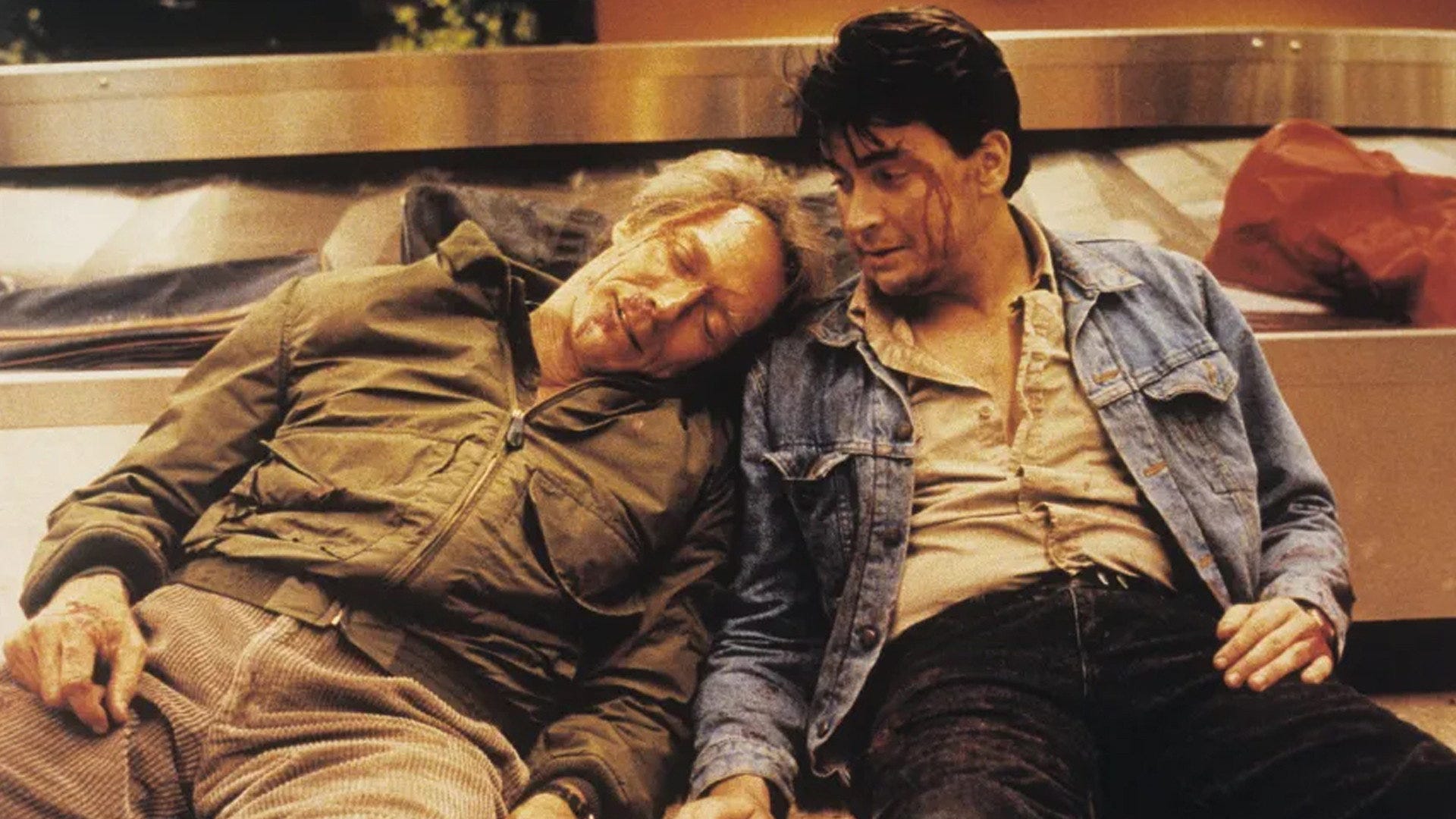
You have a grizzled, older detective who doesn’t play by the rules teamed up with a younger partner who plays it more by the book. It takes the exact dynamic of Lethal Weapon and flips the roles. Truthfully, it makes sense for the older cop to be the one who skirts the rules; he is simply getting too old to play games set by the station. I really liked that element.
His partner is played by Charlie Sheen, and the two of them actually work well together. I am much more used to seeing a crazier side of Charlie Sheen, so this cleaned-up, pretty-boy version didn’t click for me right away. However, as the film plays out, Clint Eastwood’s character wears him in, to put it lightly. Between the two of them, the film feels more like a Charlie Sheen movie than a Clint Eastwood movie. Eastwood does his usual thing—he has his mannerisms and his silly little quips that he drops every now and again—but the character with real depth and development is undoubtedly Charlie Sheen’s David Ackerman. He carries hidden trauma from decades past, similar to how Mel Gibson’s character, Riggs, carries the trauma of his wife’s death. The movie features clear mirrored themes, narrative choices, and character beats throughout, while still maintaining its own independent voice and style.
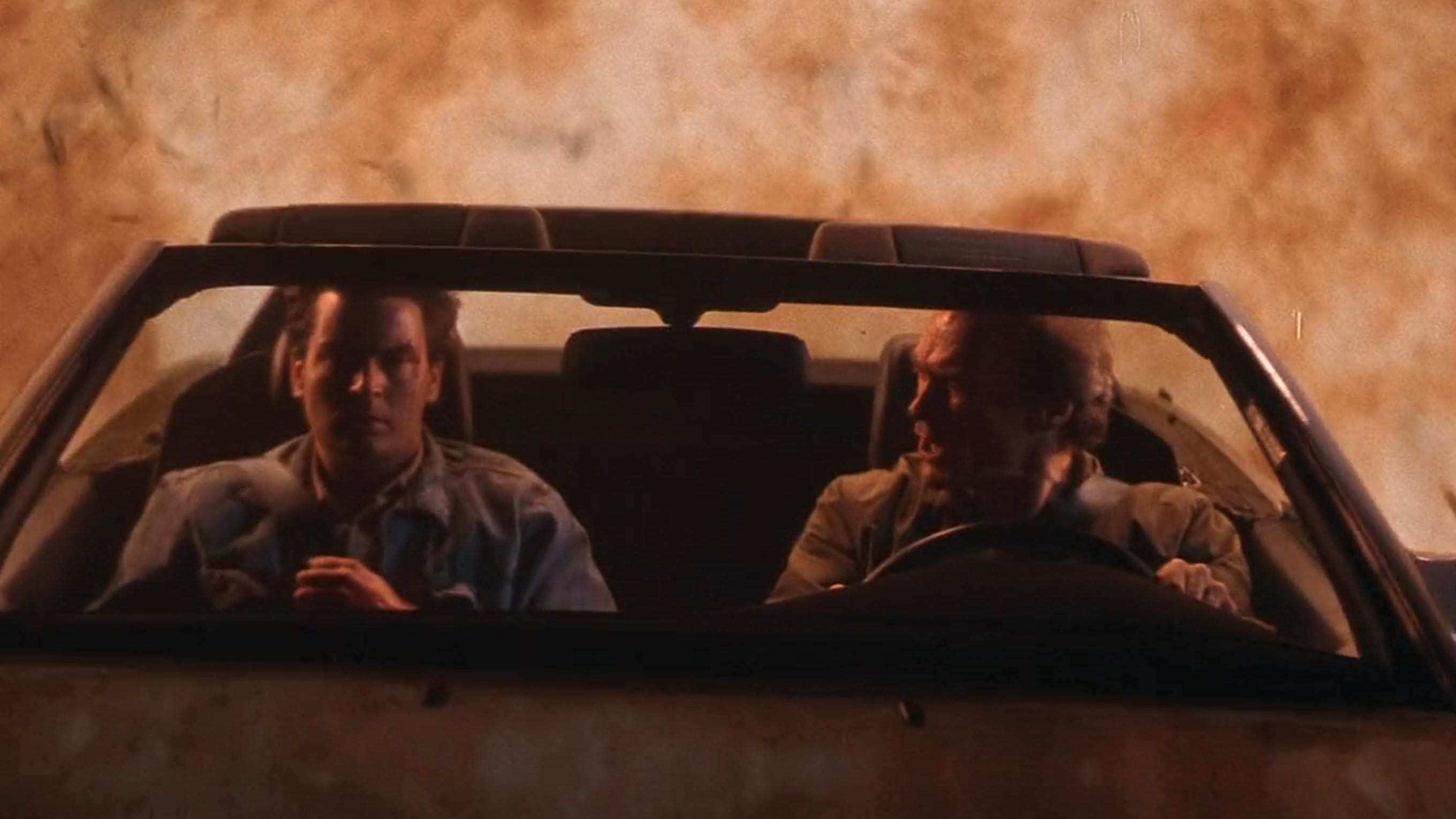
From an action standpoint, two or three sequences stand out particularly well. The high-stakes car chase near the beginning involves a ton of practical effects and stunt work in the middle of the night with a semi-truck transporting cars. It is an exhilarating sequence because you can tell it was all done for real—no CGI. A lot of it was shot from a wide enough distance that you can always tell what is happening, unlike many action scenes that rely on tight, disorienting edits. Later in the movie, a building explodes, leading to a shot where the duo escapes in a car jumping through the air with the explosion right behind them. Eastwood looks over at Sheen and says, “Buckle your seatbelt, kid.” It is over-the-top, unrealistic, and reminiscent of Fast & Furious, but it was fun nonetheless.
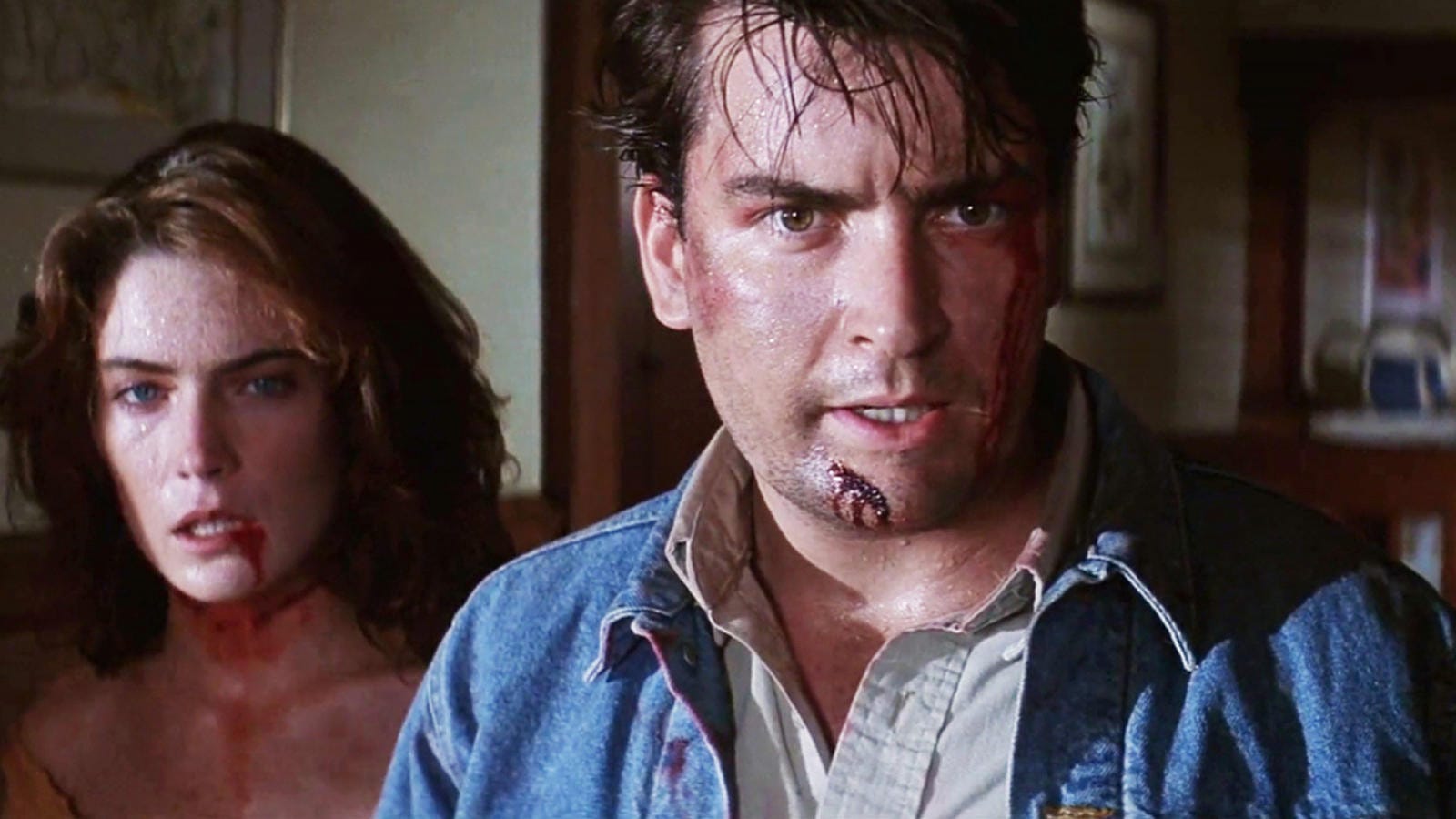
However, the film overall stalls out a bit—specifically when the duo stops being a duo. Eastwood and Sheen work so well together and are arguably the best part of the picture, so the film hits an understandable lull when Eastwood’s character gets kidnapped and Charlie Sheen’s character has to handle things on his own. This portion of the movie should feel exciting and tense, but it turns into the most boring stretch. The villains are not particularly interesting, so by that point, I just didn’t care as much. Don’t get me wrong: the film up to that point wasn’t perfect. It had its moments, its humor, and its action scenes, even if every one of those moments paled in comparison to something like Lethal Weapon. Their chemistry was simply the most engaging part of the movie, and kidnapping Eastwood’s character put a massive wedge right in the middle of it.
Overall, I think this was a fine Eastwood film, though it certainly won’t end up in my top ten. A lot of these movies land in a similar territory. I am 15 films in now, and a majority of them have been rated close enough to make me slightly worried about the rest of the filmography. Then again, 7 out of the 15 I’ve seen were rated 7 out of 10 or above, which is a good sign. This one, though, doesn’t live among those seven.
Technical/Unbiased Score: 32/50 (64%)
Biased/Entertainment Score: 28/50 (56%)
Total Combined Score: 60/100 (60% or 3/5 on Letterboxd)